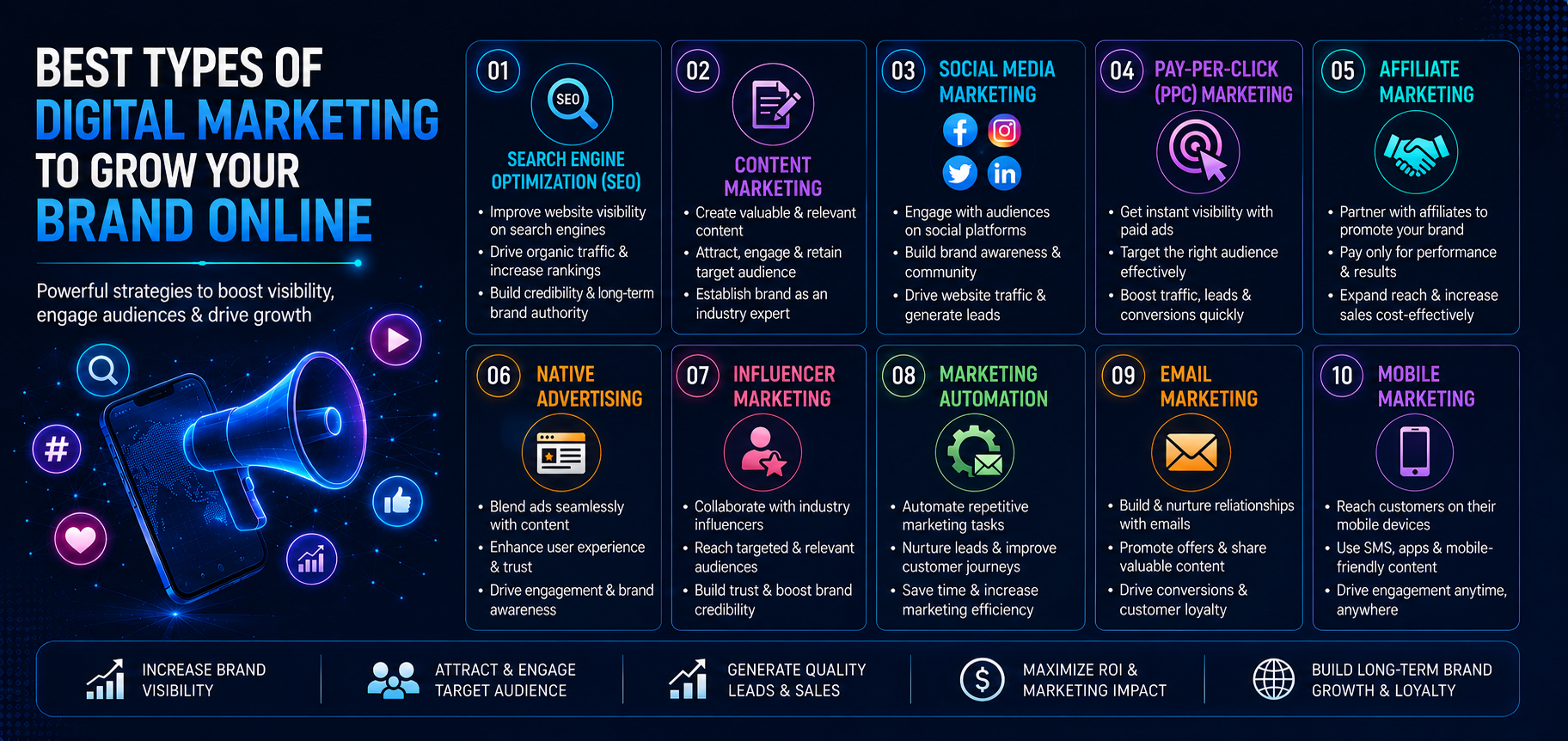
Digital marketing has become widely used because it allows businesses to reach a large number of people through online platforms. Along with this wide reach, it also provides several other important advantages that help improve overall marketing performance.
Wide Reach Across Locations
Online advertising makes it possible for businesses to promote their products and services to audiences anywhere in the world. Unless restricted by location settings, digital ads can be seen by users across different regions, helping businesses expand their customer base and brand visibility.
Cost-Effective Marketing
Compared to traditional marketing methods like TV, newspapers, or radio, digital marketing is generally more affordable. Businesses can run campaigns with flexible budgets and still achieve strong results. A single piece of content, such as a blog or social media post, can continuously attract visitors without high ongoing costs.
Measurable Performance
One of the biggest advantages of digital marketing is that results can be tracked easily. Businesses can monitor clicks, impressions, conversions, website traffic, and sales in real time using analytics tools. This makes it easier to understand what is working and what needs improvement.
Better Personalization
Digital marketing allows businesses to collect user data and create highly targeted campaigns. Instead of sending the same message to everyone, companies can customize content based on user interests, behavior, age group, or preferences. This increases engagement and improves conversion rates.
Strong Customer Engagement
Unlike traditional marketing, digital platforms allow two-way communication between businesses and customers. Users can comment, share, like, and respond to content instantly. This interaction helps build stronger relationships and increases brand trust and loyalty.
Faster Conversions
Digital marketing makes it easy for users to take immediate action. Whether it is clicking a link, signing up for a newsletter, or making a purchase, customers can move through the buying process quickly and conveniently from any device.
How to Build a Digital Marketing Strategy
Creating a successful digital marketing plan requires a clear structure and proper planning. The following steps help businesses build an effective strategy:
Set Clear Objectives
Define specific and measurable goals that align with your business needs. These goals should be realistic and time-based to ensure better focus and direction.
Understand Your Target Audience
Identify who your ideal customers are based on factors like age, location, interests, and buying behavior. This helps in selecting the right platforms and creating relevant content.
Plan Your Budget
Decide how much you are willing to invest in digital marketing. A proper budget helps control spending and ensures resources are used efficiently across different channels.
Choose the Right Marketing Channels
Select the platforms that best match your audience and goals. These may include social media, search engines, email marketing, content marketing, or paid advertising.
Analyze and Improve Performance
Track campaign results regularly using analytics tools. Studying performance data helps identify strengths and weaknesses, allowing you to improve future marketing efforts.
Digital marketing plays a key role in business growth by improving visibility, engagement, and conversions. With the ability to connect directly with customers and measure results accurately, it has become an essential part of modern marketing strategies.